
How to Build a Breakfast Rotation Around Your Family's Favorites
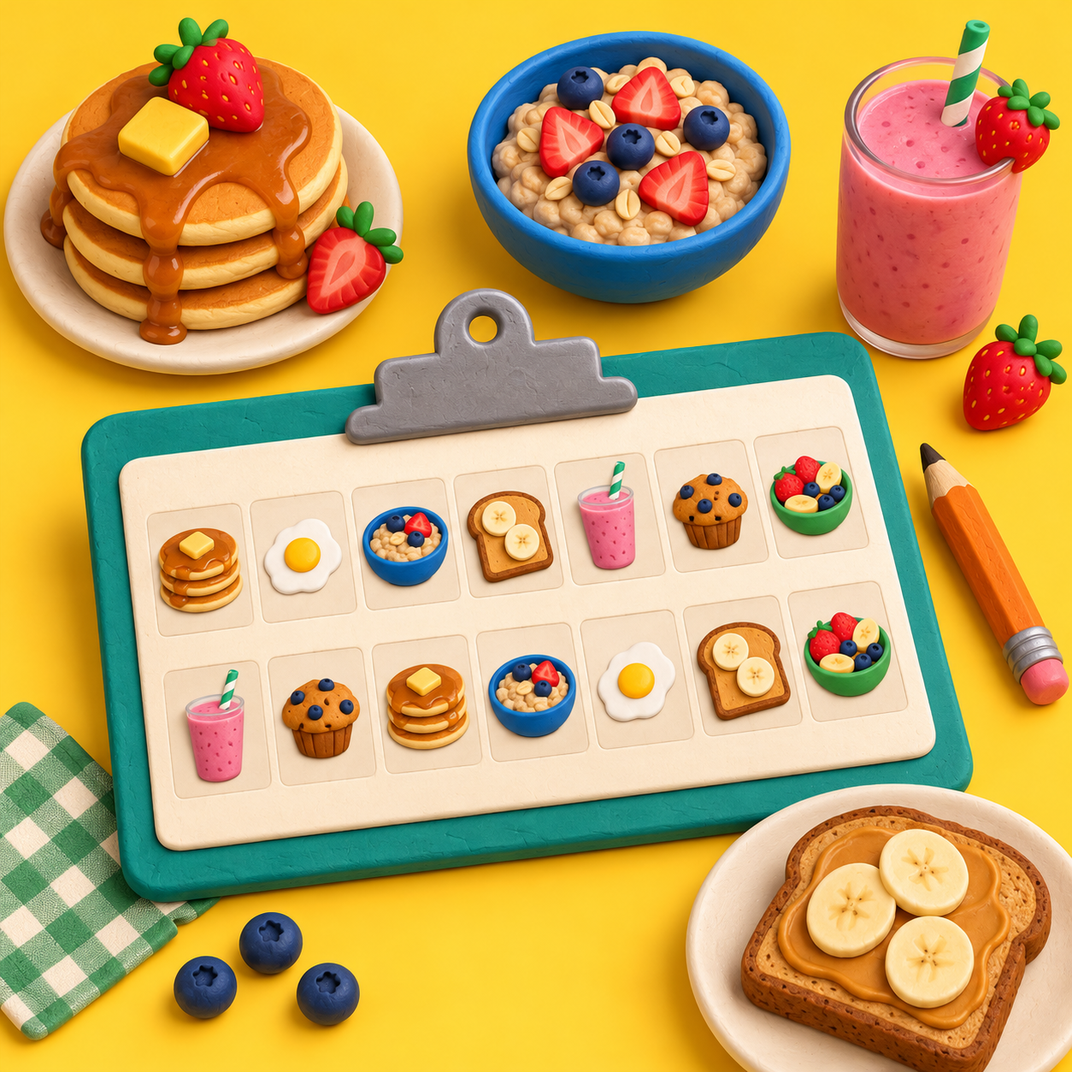
Make a two-week breakfast grid from meals your family already enjoys. Start with fifteen minutes together and a pen, then write the shopping list from the breakfasts you choose.
A breakfast rotation is a short list of meals your family already loves, repeating on a rhythm you set. Match ready-to-eat breakfasts to busy mornings and leave time for cooking on days that allow it.
Step 1: Collect the real favorites
Gather the family for ten minutes and list every breakfast people already eat happily. Everything counts: toast with peanut butter, freezer waffles, scrambled eggs, cereal with fruit, last night's pancakes. Aim for ten to fifteen items. You are not inventing new meals here. You are catching the ones that already work.
If your kids are small, watch what disappears fastest for a week instead. Eaten food is the only honest vote.
Step 2: Sort the list into three buckets
Split your favorites by how much morning they need:
- Grab-and-go: muffins, overnight oats, breakfast burritos, yogurt cups. These carry school days.
- Quick sit-down: toast, eggs, oatmeal, smoothies. These carry mornings with ten spare minutes.
- Weekend: pancakes, French toast, anything with syrup and time. These make Saturdays feel like Saturdays.
Step 3: Lay out a two-week grid
Draw two weeks of days and drop breakfasts in. A simple pattern works well: grab-and-go Monday through Wednesday, quick sit-down Thursday and Friday, weekend special Saturday, family choice Sunday. Repeat with small swaps for week two.
Repeat the pattern in week two with a few different favorites if your family wants variety.
Step 4: Let the grid write the grocery list
Read your grid and list what each week needs, in amounts. Three mornings of egg muffins for four people is twenty-four muffins, so eggs, cheese and vegetables go on the list in those numbers. When the grid is stable, the list barely changes week to week, and shopping turns into a ten-minute refill instead of a guessing game.
Amounts come from the plan, not from memory. You stop buying too much yogurt and not enough eggs, and the food you buy has a job before it enters the house. The same list habit powers weekly meal planning for the whole family if you want lunches and dinners on autopilot too.
Step 5: Prep the grab-and-go bucket ahead
The rotation runs on one habit: the grab-and-go items exist before the week starts. A single weekend prep session stocks the bucket. Bake the muffins, fill the jars, wrap the burritos, and line them up on one fridge shelf. Everything else in the rotation cooks fast enough to make fresh. Cooked egg dishes keep three to four days in the fridge, per the FoodSafety.gov storage chart, so anything prepped for later in the week goes in the freezer.
Step 6: Review once a month
At the end of each month, ask one question: which breakfast got left behind? Swap it for a new candidate from the favorites list, one at a time.
One swap a month keeps the rotation fresh without breaking the rhythm that makes it work. Change everything at once and you are back to guessing.
A sample two-week rotation
- Monday: egg muffins (prepped Sunday)
- Tuesday: overnight oats (prepped Sunday)
- Wednesday: breakfast burritos (from the freezer)
- Thursday: toast with peanut butter and banana
- Friday: smoothies
- Saturday: pancakes, the full production
- Sunday: family's choice
Week two repeats with small swaps: yogurt cups for oats, scrambled eggs for toast, French toast for pancakes.
Try it tonight
- Set a timer for ten minutes and collect the favorites list from the family.
- Sort the list into the three buckets.
- Fill in just next week: five weekday breakfasts, one weekend special.
- Write the grocery list from the grid, in amounts.
The second week of the grid can wait until the first one runs.
Common mistakes to avoid
- Starting with recipes instead of favorites. Start with what already gets eaten.
- Rotating too many meals. Ten to fifteen favorites is plenty. More variety means more shopping, more prep and more decisions.
- Skipping the prep session. Grab-and-go only works if it is ready to grab. One weekend session carries the week.
- Changing everything at once. Swap one meal at a time. A rotation that shifts slowly is a rotation that survives.
Questions families ask
What if my kids refuse anything that repeats? Keep the grid but change the toppings. Try offering a choice of toppings for the same oats, then include those toppings on the shopping list.
How is this different from meal planning? It is the narrow version. A meal plan decides what to cook; a rotation decides what repeats, so there is less to plan. The two pair well, and the rotation usually comes first because breakfast is the easiest meal to stabilize.
What if our schedule is unpredictable? Shrink the grid to the days you control. A family with chaotic Fridays plans Monday through Thursday and leaves Friday open. A partial grid still removes most of the decisions.
Share This Guide
Recommended Posts
- Paper, App or Spreadsheet: How to Choose Your Budget TrackerThe right budget tracker is the one you open every week. Compare paper, apps and spreadsheets, then run the two-week trial that picks yours.
- How to Build a Family Budget Around Your PrioritiesBuild a family budget that covers essential bills and makes room for your priorities. Seven steps, a sample month and a weekly check-in.
- How to Prep Grab-and-Go Breakfasts for the WeekOne weekend prep session sets up a week of grab-and-go breakfasts. The system, the storage rules and a full sample session.
Recent Posts
- How to Make a One-Page Family BudgetBuild a family budget that fits on one page: bills, three priorities, one flexible number and a weekly five-minute check. With a filled-in example.
- High-Protein Breakfasts You Can Prep AheadHigh-protein breakfasts that hold up in the fridge: the prep-ahead players, one weekend session, and kid-friendly balance without counting grams.
- How To Organize A Substitute Teacher BinderHow to organize a substitute teacher binder so a sub can run your class smoothly, with a list of what to include.
- How To Track Homeschool Attendance HoursHow to track homeschool attendance and learning hours simply, so your records are ready when you need them.
- 7-Day Juice Plan For BeginnersA simple 7-day juice plan for beginners, with how to shop, prep and plan juices so your produce does not go to waste.