
High-Protein Breakfasts You Can Prep Ahead
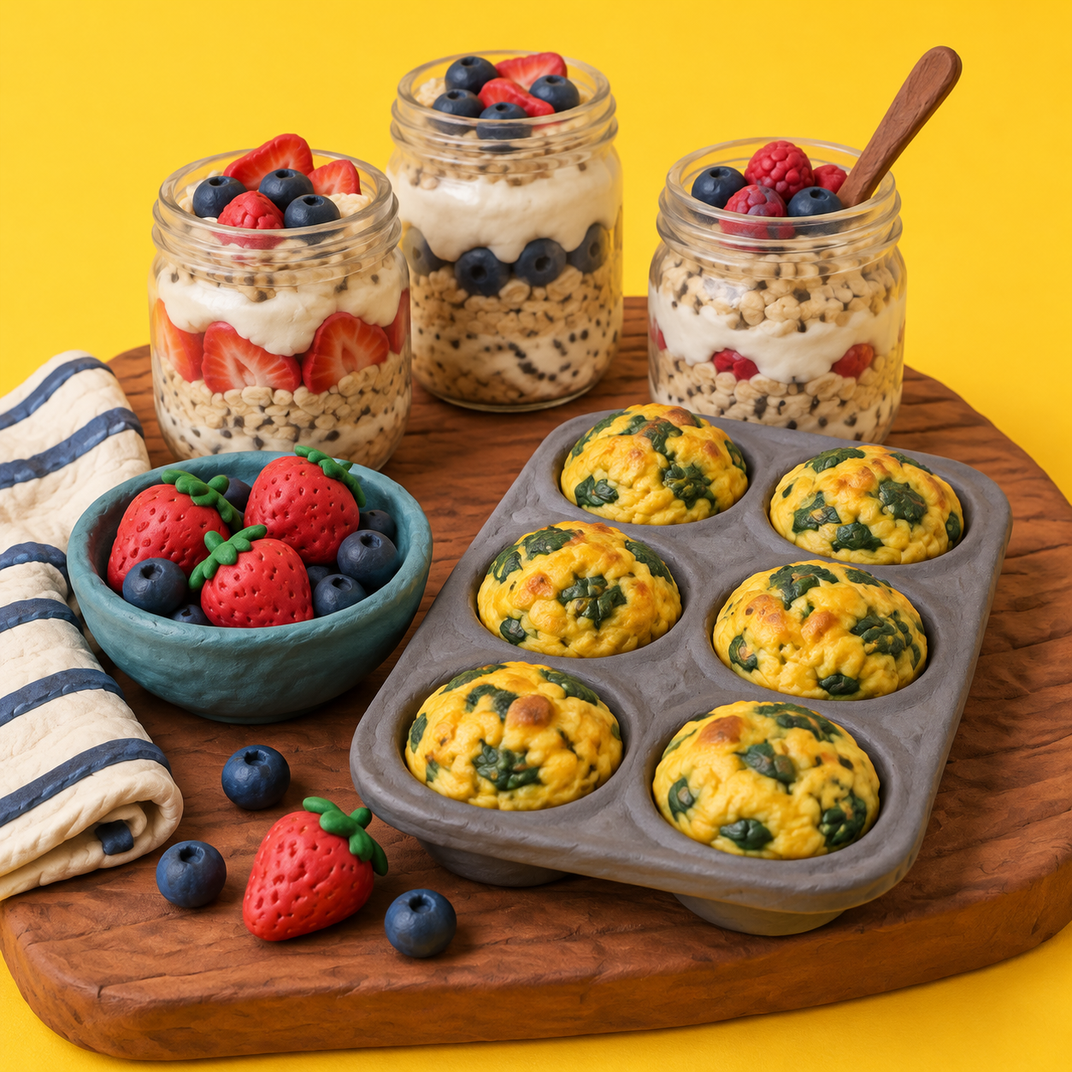
Prep egg muffins, oats and yogurt cups ahead, then pair them with foods your family enjoys. Set aside about an hour on a weekend and choose two breakfasts to start.
Why protein gets the spotlight
The FDA breakfast guidance for kids recommends a balance of fruits and vegetables, protein foods, grains and dairy throughout the day. It notes that a breakfast containing protein, fat and carbohydrates helps children feel full and stay focused until lunch. Eggs, nuts, seeds and beans are choices in the MyPlate protein foods group. Yogurt, cottage cheese and milk also provide protein; oats add whole grains.
The prep-ahead protein players
These all keep well and portion easily. Protein figures below come from USDA FoodData Central; brands vary, so treat your label as the final word.
- Egg muffins: eggs baked in a muffin tin with vegetables and cheese. One large egg brings about 6 grams of protein, and the cooked muffins keep three to four days in the fridge.
- Overnight oats with Greek yogurt: oats soaked overnight with yogurt and milk. Plain nonfat Greek yogurt runs about 10 grams of protein per 100 grams, so a typical single-serve container lands around 15 to 17 grams. The Food Network overnight oats recipe keeps up to four days refrigerated in an airtight container.
- Yogurt parfait cups: yogurt layered with fruit, granola on the side. Assembly takes a minute per cup.
- Cottage cheese bowls: about 24 grams of protein per cup of 2% cottage cheese, paired with fruit and a drizzle of honey. Portion into containers with toppings separate.
- Breakfast burritos: scrambled eggs with beans and cheese, wrapped and frozen. Beans add fiber and protein, and the burritos reheat from frozen in a couple of minutes.
- Peanut butter oat bars: oats, peanut butter and honey pressed into a pan and chilled. Peanut butter brings about 7 grams of protein in every two tablespoons.
A simple prep session
One weekend session covers most of the week:
- Bake a dozen egg muffins.
- Fill four jars with overnight oats while the oven runs.
- Layer three or four parfait or cottage cheese cups.
- Wrap any extras for the freezer.
Count two egg muffins as one breakfast serving in this example. A dozen muffins makes six servings; four oats jars and three or four yogurt or cottage cheese cups bring the total to thirteen or fourteen breakfasts, before any freezer extras. Adjust portions and pairings to suit each person.
Store and reheat safely
Prep-ahead only works inside safe storage windows:
- Cooked egg dishes keep three to four days in the fridge, per the FoodSafety.gov cold storage chart. Plan egg muffins for the first half of the week or freeze half.
- Overnight oats keep in airtight jars for the window the linked recipe gives. Once oats, milk and yogurt are mixed, the jar is a prepared food with its own clock, not the dates on the cartons.
- Burritos and oat bars freeze well for weeks. Wrap, date and freeze on a tray before bagging.
- Cooked items served hot, like egg muffins and burritos, reheat until steaming all the way through; 165°F is the safe temperature for reheated leftovers.
Mix protein with fiber and fruit
Add fruit and a whole-grain food to the breakfasts you prep. Try egg muffins with whole-grain toast and a banana, or oats with berries and yogurt. The FDA guidance for kids considers balance across the day, so these pairings are examples rather than a claim that one meal meets every child's needs.
For kids, keep it ordinary
An egg muffin, a yogurt cup or peanut butter on toast can be part of breakfast. Offer portions suited to your child and adjust for appetite, growth and activity. If your child's doctor or dietitian has given you specific guidance, follow that.
Try it this weekend
- Pick two players from the list, one baked and one no-cook.
- Prep five to eight portions on Sunday.
- Label everything with the date and set it on one fridge shelf.
- Serve the fridge items first and freeze the rest.
Common mistakes to avoid
- Chasing numbers. This plan does not set a protein target. Use food labels if you want to compare foods, and follow any guidance your clinician has given you.
- Protein products over protein foods. Powders and bars are optional extras. Eggs, yogurt, beans and oats are simple, familiar starting points.
- Forgetting the freezer. Portions meant for the second half of the week go straight to the freezer on prep day, labeled with the date.
- Skipping the pairings. Include fruit and whole-grain foods alongside the protein foods you prep.
Questions families ask
Do I need to hit a specific protein number at breakfast? This guide does not set one. If you want numbers for your own staples, food labels plus USDA FoodData Central list what each food carries, and your family's doctor or a dietitian can tell you what fits your household.
Are protein powders okay for kids? The linked FDA breakfast article discusses meals, not whether a protein powder is suitable for a particular child. Ask your child's clinician or dietitian before adding a supplement.
Can I prep two weeks at once? Fridge items cover the first few days, so the second week leans on the freezer. Double the burritos and oat bars, portion fresh yogurt cups each week, and the plan holds.
Share This Guide
Recommended Posts
- Paper, App or Spreadsheet: How to Choose Your Budget TrackerThe right budget tracker is the one you open every week. Compare paper, apps and spreadsheets, then run the two-week trial that picks yours.
- How to Build a Breakfast Rotation Around Your Family's FavoritesA breakfast rotation built from your family's real favorites ends the daily breakfast decision. The grid, the shopping rhythm and the prep habit.
- How to Build a Family Budget Around Your PrioritiesBuild a family budget that covers essential bills and makes room for your priorities. Seven steps, a sample month and a weekly check-in.
Recent Posts
- How to Prep Grab-and-Go Breakfasts for the WeekOne weekend prep session sets up a week of grab-and-go breakfasts. The system, the storage rules and a full sample session.
- How to Make a One-Page Family BudgetBuild a family budget that fits on one page: bills, three priorities, one flexible number and a weekly five-minute check. With a filled-in example.
- How To Organize A Substitute Teacher BinderHow to organize a substitute teacher binder so a sub can run your class smoothly, with a list of what to include.
- How To Track Homeschool Attendance HoursHow to track homeschool attendance and learning hours simply, so your records are ready when you need them.
- 7-Day Juice Plan For BeginnersA simple 7-day juice plan for beginners, with how to shop, prep and plan juices so your produce does not go to waste.